Best Business Management Books are must-reads for entrepreneurs and professionals looking to take their careers to the next level. The stories of success and failure shared in these books are a testament to the power of knowledge and the importance of continuous learning. From timeless classics to modern bestsellers, the books listed in this thread offer a wealth of insights and strategies for success.
In this thread, we’ll explore the top business management books that have made a significant impact on modern business practices. We’ll discuss the key takeaways from classic books like “The Practice of Management” and “The 7 Habits of Highly Effective People”. We’ll also dive into inspirational books like “The 21 Irrefutable Laws of Leadership” and “Dare to Lead”. Whether you’re a seasoned executive or just starting out, these books are sure to inspire and motivate you to achieve your goals.
Classic Business Management Books

Classic business management books have stood the test of time, offering timeless wisdom and practical advice for entrepreneurs, managers, and business leaders. These books have become staples of business literature, influencing generations of business professionals and shaping the way we approach management, leadership, and strategy. In this section, we’ll explore four iconic business management books that every business leader should read.
The Practice of Management by Peter Drucker
Peter Drucker’s “The Practice of Management” is a foundational book in the field of business management, published in 1954. It marked a departure from traditional management approaches, focusing on the importance of integrating business functions into a unified system. Drucker’s work emphasized the need for effective management practices to achieve business success. Key takeaways from this book include:
- Management is a distinct function within organizations, with its own set of principles and practices.
- Management should focus on achieving business goals and objectives, rather than just executing tasks.
- Effective management involves planning, organizing, staffing, directing, and controlling.
- Management should be a holistic approach, encompassing not just technical skills but also social and emotional intelligence.
In Search of Excellence by Tom Peters and Robert Waterman
Tom Peters and Robert Waterman’s “In Search of Excellence” (1982) is a seminal work that identified the characteristics of successful companies, highlighting the importance of values, culture, and innovation. The book became a bestseller, influencing numerous organizations around the world. Main concepts presented in this book include:
- Xerox’s success demonstrates the importance of innovation and experimentation in business.
- Companies like IBM and Procter & Gamble showcase the benefits of a strong corporate culture and leadership values.
- Effective managers communicate effectively, empower employees, and create a sense of purpose.
- Business success is not just about achieving short-term results, but also about building a strong foundation for long-term growth.
The 7 Habits of Highly Effective People by Stephen Covey
Stephen Covey’s “The 7 Habits of Highly Effective People” (1989) is a personal development classic that has inspired millions of readers worldwide. Covey’s work emphasizes the importance of developing habits that lead to personal effectiveness and professional success. Key takeaways from this book include:
- Habit 1: Be Proactive – Individuals take responsibility for their own lives and choices.
- Habit 2: Begin with the End in Mind – People focus on long-term goals and outcomes.
- Habit 3: Put First Things First – Prioritize tasks and manage time effectively.
- Habit 4: Think Win-Win – Build relationships and achieve mutually beneficial outcomes.
- Habit 5: Seek First to Understand, Then to Be Understood – Listen and communicate effectively.
- Habit 6: Synergize – Combine diverse perspectives and strengths to achieve better results.
- Habit 7: Sharpen the Saw – Continuously learn, grow, and renew oneself.
Competitive Strategy by Michael Porter, Best business management books
Michael Porter’s “Competitive Strategy” (1980) introduced the concept of generic competitive strategies, including cost leadership, differentiation, and focus. Porter’s work emphasizes the importance of a company’s overall strategy in achieving success. Key takeaways from this book include:
“To make a product, service, or experience in a new, valuable, and sustainable way is to make it better than the alternatives available to customers. To make it better than alternatives is to create value. To create value is to differentiate.
- Cost leadership involves achieving lower costs than competitors, allowing a company to offer lower prices and increase market share.
- Differentiation involves creating unique products or services that offer superior value to customers, making it difficult for competitors to replicate.
- Focus involves targeting a specific market segment and concentrating efforts to meet that segment’s unique needs.
Inspirational Business Management Books
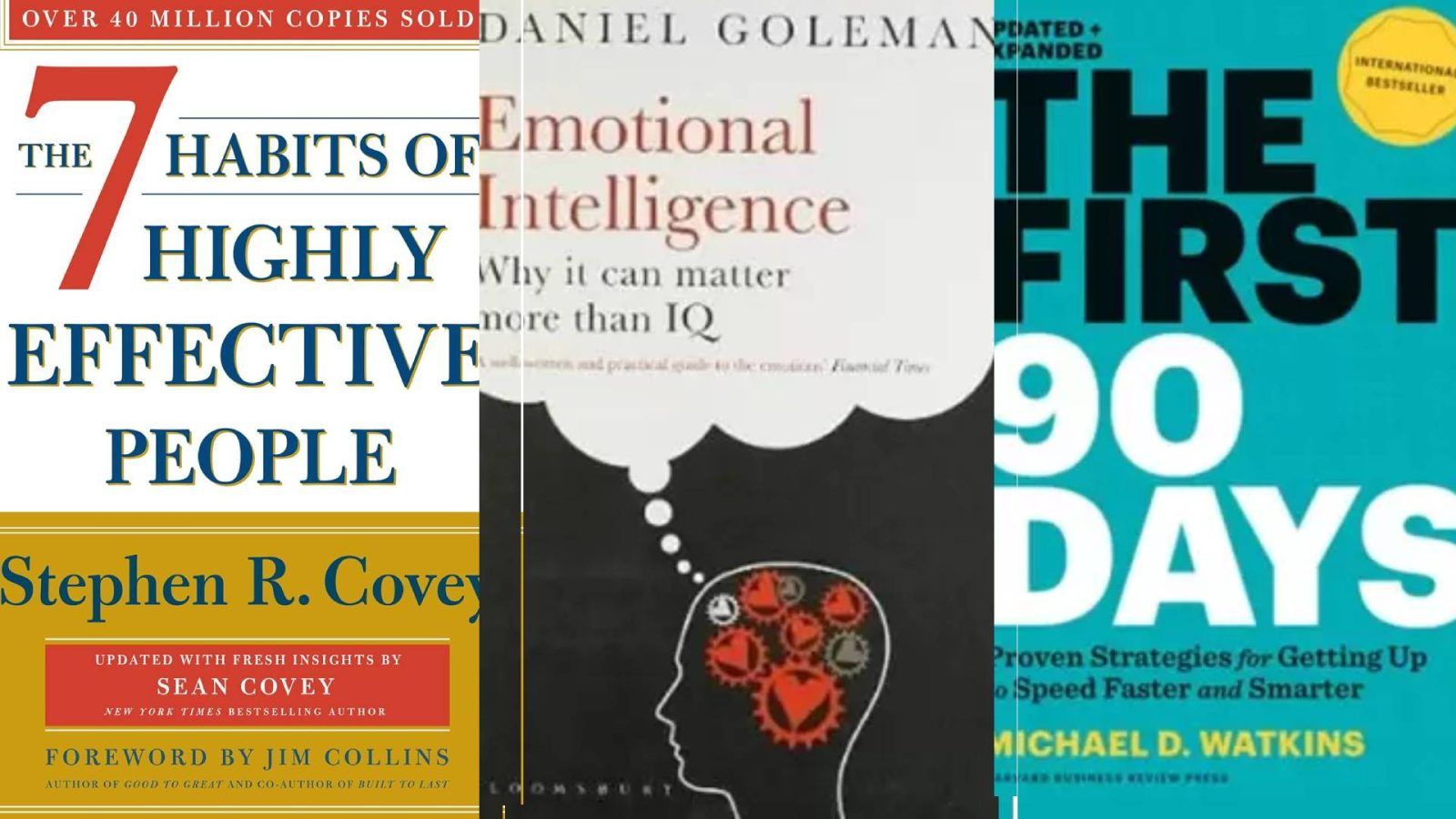
Inspirational business management books are a treasure trove of knowledge and ideas to boost your leadership skills, motivate your team, and drive success in your organization. These books are not just mere self-help guides but offer practical advice, actionable strategies, and time-tested principles to overcome the challenges of the business world. In this section, we will explore four of the most influential inspirational business management books that have made a significant impact on entrepreneurs, businesses, and leaders globally.
The 21 Irrefutable Laws of Leadership by John Maxwell
“The 21 Irrefutable Laws of Leadership” by John Maxwell is a comprehensive guide to effective leadership, offering a framework for building leadership skills and developing a winning team. The book emphasizes that leadership is a skill that can be learned through practice, dedication, and a willingness to learn from others. Maxwell identifies 21 laws of leadership, which are:
*
The Law of the Lid
Leadership ability determines a person’s level of effectiveness in their life and leadership. It’s essential to identify and develop your leadership abilities.
*
The Law of Influence
The greatest leader is not necessarily the one who has the most authority, but the one who has the greatest influence.
*
The Law of Intuition
Good leaders are guided by a strong intuition that is based on their experience, wisdom, and ability to interpret signs and signals.
- The Law of Respect – People naturally follow people they respect.
- The Law of Explosive Opportunity – Your ability to recognize and seize opportunities determines your level of achievement.
- The Law of Explosive Opportunity – Your ability to recognize and seize opportunities determines your level of achievement.
Unshakeable by Tony Robbins
“Unshakeable” by Tony Robbins offers practical advice on how to achieve financial freedom and peace of mind. The book focuses on three key areas: investing, debt management, and creating a stable financial foundation. Robbins emphasizes that it is not just about making money but about how you manage your finances and create a solid financial plan for the long term.
“Investing is not about beating others at their game. It’s about controlling yourself at your game.”
- Develop a long-term investment strategy focusing on a diversified portfolio.
- Learn to manage debt effectively by paying off high-interest loans and credit cards.
- Build an emergency fund to cover six months of living expenses.
The 10X Rule by Grant Cardone
“The 10X Rule” by Grant Cardone is a motivational guide to achieving your goals by setting a higher standard for yourself. The book emphasizes that most people set unrealistic goals and then wonder why they fail to achieve them. Cardone insists that you should set goals that are at least 10 times what you thought possible.
“The biggest risk is not taking any risk… In a word, the answer is: Growth.”
- Set bold and ambitious goals that are at least 10 times what you thought possible.
- Develop a growth mindset and be willing to learn from failure.
- Create a plan of action to achieve your goals, with a clear timeline and milestones.
Dare to Lead by Brené Brown
“Dare to Lead” by Brené Brown is a leadership book that focuses on courage, vulnerability, and empathy in the workplace. The book emphasizes that good leaders are not just about achieving success but also about creating a culture of trust, respect, and empathy in their teams.
“Vulnerability is the birthplace of love, belonging, and creativity.”
| Key Takeaway | Description |
|---|---|
| Courage | Good leaders have the courage to take risks and make tough decisions, even when faced with uncertainty. |
| Vulnerability | Effective leaders are willing to be vulnerable and open, creating a culture of trust and respect. |
| Empathy | Good leaders have the ability to understand and relate to others, creating a positive and inclusive work environment. |
As an entrepreneur, reading the right business management books can be a game-changer. Not only do they provide valuable insights, but they also equip you with the tools and strategies to navigate the complexities of starting and running a successful business. In this section, we’ll delve into four books that have been instrumental in shaping the entrepreneurial landscape.
In “Crush It!”, Gary Vaynerchuk shares his startup strategies for turning an idea into a successful business. The book is a must-read for any entrepreneur looking to leverage social media and online platforms to market their products or services. Here are some key takeaways from the book:
- Vaynerchuk emphasizes the importance of having a unique value proposition and being clear about your target audience.
- He advocates for using social media platforms such as Facebook, Twitter, and YouTube to create a strong online presence and engage with your audience.
- The book provides a step-by-step guide on how to create and optimize content for maximum visibility and engagement.
- Vaynerchuk also stresses the importance of building a strong personal brand and leveraging your expertise to differentiate yourself from competitors.
“When you’re not trying to crush it, you’re not taking the necessary risks to make a name for yourself.”
In “Rich Dad Poor Dad”, Robert Kiyosaki presents a fresh perspective on marketing ideas and financial literacy. The book challenges conventional wisdom and provides actionable advice for entrepreneurs looking to create wealth. Here are some key takeaways from the book:
- Kiyosaki argues that financial education is key to creating wealth and that most people lack the knowledge to make informed financial decisions.
- The book advocates for thinking like an entrepreneur and taking calculated risks to create new opportunities.
- Kiyosaki also emphasizes the importance of building multiple streams of income and diversifying your investments.
- The book provides guidance on how to create a financial plan and set clear financial goals.
“The poor and the middle class work for money. The rich have money work for them.”
In “Getting Things Done”, David Allen presents a practical guide to productivity and time management. The book provides actionable advice for entrepreneurs looking to optimize their workflow and reduce stress. Here are some key takeaways from the book:
- Allen emphasizes the importance of capturing and organizing all tasks, projects, and ideas in a centralized system.
- The book provides guidance on how to break down large projects into smaller, manageable tasks.
- Allen also advocates for using a “someday” list to capture ideas and projects that don’t have a deadline.
- The book provides tips on how to prioritize tasks and minimize distractions.
“The key is to understand exactly what needs to be done and then focus on the next action that needs to be taken.”
In “The Lean Startup”, Eric Ries presents a comprehensive guide to the business planning process. The book provides a step-by-step approach to launching and scaling a successful startup. Here are some key takeaways from the book:
- Ries emphasizes the importance of iterating quickly and testing hypotheses to validate assumptions.
- The book provides guidance on how to create a minimum viable product (MVP) and gather feedback from customers.
- Ries also advocates for using the build-measure-learn feedback loop to refine and improve the product.
- The book provides tips on how to pivot when necessary and adapt to changing market conditions.
“The best way to get started is to quit talking and begin doing.”
Ultimate Conclusion

In conclusion, the best business management books are a valuable resource for anyone looking to succeed in today’s fast-paced business world. By applying the strategies and principles Artikeld in these books, you’ll be well on your way to achieving your goals and overcoming the challenges that stand in your way. Remember, the key to success is continuous learning and a willingness to adapt and grow. Stay tuned for more insights and recommendations on the best business management books.
FAQ Section: Best Business Management Books
Q: What is the most important quality of a business management book?
A: A great business management book should be engaging, informative, and easy to apply to your life and career.
Q: Can I skip the classic business management books?
A: While modern books may be more fashionable, classic books like “The Practice of Management” and “The 7 Habits of Highly Effective People” are timeless and worth reading.
Q: Are business management books only for entrepreneurs and business professionals?
A: No, business management books offer valuable insights and strategies for anyone looking to improve their career and personal life.
Q: How do I choose the best business management book for me?
A: Consider your goals, interests, and reading style when choosing a business management book. Look for books with a clear structure, engaging writing, and actionable advice.

